Introduction: In video services targeting Japanese users, utilizing Japan’s native IP address, TVer, to improve the loading speed and stability of the video platform is at the core of technical optimization and geo-strategic strategies. This article provides practical and compliant optimization suggestions, covering both SEO and user experience, from theory to application.
Japanese original IP These refer to address ranges that are actually assigned to Japanese networks and have a direct impact on local routing, latency, and bandwidth. As a typical Japanese video distribution scenario, TVer places emphasis on localized traffic handling. Combining native Japanese IPs with platform integration strategies can significantly improve loading performance and user experience within a particular region.
Localized optimizations directly reduce the time to first render and the buffering rate by minimizing cross-border links, reducing the number of hops, and optimizing routing paths. It has a positive impact on both search engines and the local user experience. Using native Japanese IPs can improve page loading speeds, video playback times, and overall stability, thereby enhancing user retention rates and conversion rates.
By deploying edge nodes within Japan or selecting a CDN service with a POP location in Japan, it is possible to distribute traffic more locally. Caching media resources in tiers, with popular content stored on edge nodes in Japan and less frequently accessed content kept in central storage, allows for a balance between cost and performance while reducing the load on the origin servers.
Set Cache-Control, Expires, and Etag appropriately to ensure that static resources are cached for an extended period of time, while dynamic streaming content is fetched from the origin server on demand. For segmented videos, using long-term segment caching and enabling segmented origin-pull throttling can not only reduce latency but also improve stability and bandwidth utilization.
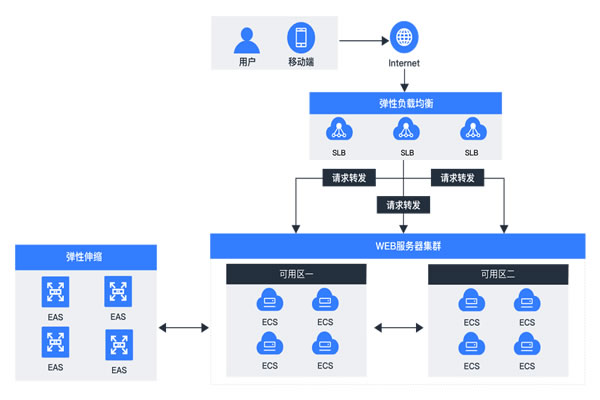
Using proximity-based resolution and Anycast DNS ensures that Japanese users are directed to the nearest edge node. By combining DNS policies with the connectivity of Japanese ISPs, it is possible to reduce resolution times and error rates. Failover is implemented in conjunction with health checks to ensure the stability and availability of resolution services.
Enabling TCP fast opening, optimizing congestion control algorithms, and using HTTP/2 or HTTP/3 can reduce handshake times and the overhead associated with establishing multiple concurrent connections. Optimizing MSS, keep-alive mechanisms, and TLS session reuse for the Japanese internet environment can help improve the loading speed of small files and the first frame of content.
By using Adaptive Bitrate Streaming and setting a reasonable initial buffering strategy based on the bandwidth distribution in Japan, continuous playback can be ensured even during network fluctuations. Adjust the player’s prefetching, buffering thresholds, and reconnection logic to balance both playback speed and stability, while avoiding frequent switching between different streams.
Establish monitoring probes across the Japanese region to track key indicators such as DNS resolution, TCP handshake times, first-byte times, and buffer utilization rates. Bind these metrics to SLAs and configure multi-level alerts and automated recovery strategies to ensure that issues can be quickly identified and resolved when they occur.
When using native Japanese IPs and local caching, comply with local data protection and traffic compliance requirements. It is necessary to anonymize user IP addresses, log data, and session information, as well as minimize the amount of this data stored. Users should be clearly informed of these practices, and legitimate authorization should be obtained whenever required, in order to avoid legal and trust-related risks.
Combining performance improvements for the Japanese-native IP Tver with SEO strategies: Accelerating page loading times, optimizing structured data, and localizing content tags can help improve visibility in Japanese search engines. By geolocating Sitemaps and providing content in local languages, the quality of local traffic and conversion rates can be improved.
Summary and Recommendations: The comprehensive deployment of Japanese edge nodes, optimization of DNS/transport protocols, proper configuration of caching and ABR mechanisms, as well as the establishment of robust monitoring and compliance processes, are all key factors in utilizing Japan-based native IP addresses to enhance the loading speed and stability of video platforms. It is recommended to implement this in phases, starting with monitoring and small-scale node validation, and gradually expanding the scope to ensure the best balance between performance and cost.
- Latest articles
- Improving the Efficiency of Cross-Border Work: A Case Study on the Deployment of Servers in Cambodia for Returning Employees in China
- Recommendations for Secure Isolation and Access Control of Data Servers in Cambodia within a Multi-Tenant Environment
- How to Join a Korean Support Group and Participate in Event Organization and Fund Management
- Which server is better for Hong Kong or the United States? Key considerations for deploying SEO and geolocation optimization strategies
- Comparison of Features, Speed, Accuracy, and Historical Data for Korean Original IP Lookup Websites
- Recommendations for Network Architecture Design and Redundancy Solutions for Alibaba Cloud’s Singapore CN2
- How to choose a Singapore-based cloud server for e-commerce and streaming services to ensure stability during peak periods?
- In-depth analysis of the effectiveness of website optimization for the US market and implementation guidelines
- Key Points of the Hosting Contract and Service Commitments for the Hong Kong Site Group from a Long-Term Operations Perspective
- Popular tags
-

japanese native ip l2tp architecture design and access control suggestions in enterprise scenarios
japanese native ip and l2tp architecture design and access control recommendations for enterprises, including access policies, authentication and key management, fine-grained access control, and high availability and performance optimization points, to help enterprises achieve secure and stable vpn services in japanese nodes. -

Channels for obtaining download images and deployment packages for Japanese CN2 VPSs, as well as methods for security verification
This document introduces common sources for obtaining download images and deployment packages for Japanese CN2 VPS instances, strategies for selecting image sources, as well as security verification methods based on checksums, GPG certificates, TLS certificates, etc. These recommendations are suitable for optimizing operations and deployment processes. -

Japanese server vendor ranking and market share analysis
This article analyzes the ranking and market share of Japanese server providers to help users choose the right server service provider.